

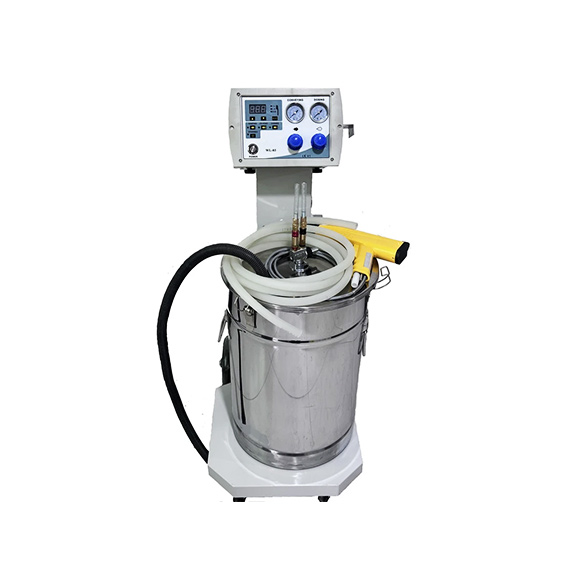
Powder Coating Machine System WL-03
Diy Powder Coating Machine
Looking for a DIY Powder Coating Machine or a complete Powder Coating Machine System? This Powder Coating System delivers pro results at home – easy setup, consistent finish, low waste. Start your project today!
Technical Data
DIY Powder Coating Machine: Your Gateway to Professional Powder Coating Systems
Powder coating has long been the gold standard for industrial finishing—prized for its durability, environmental friendliness, and stunning finish quality. For decades, however, the technology seemed out of reach for hobbyists, home enthusiasts, and small workshops, locked behind the high cost and sprawling footprint of factory-scale equipment. That has changed dramatically. The rise of the DIY Powder Coating Machine has opened the door for anyone to achieve professional-grade results in a home garage, a small workshop, or a start-up business. While a Powder Coating Machine System and a full Powder Coating System are terms often associated with automated, high-volume lines, the DIY machine represents the most accessible entry point into this transformative finishing technology—and it can grow with you as your ambitions expand.
What Exactly Is a DIY Powder Coating Machine?
A DIY Powder Coating Machine is a compact, user-friendly electrostatic powder application unit designed specifically for non-industrial users, hobbyists, and small-scale operators. It typically comes as an all-in-one package: a lightweight, handheld spray gun, a small high-voltage generator (often built into the gun or housed in a compact control box), and a simple powder feed container—commonly a cup or a small hopper that attaches directly to the gun. The machine is designed to be plugged into a standard electrical outlet and connected to a basic compressed air supply. There are no complex conveyor belts, no room-sized spray booths, and no sophisticated programmable logic controllers to master. Instead, the emphasis is on simplicity, portability, and rapid setup. A typical DIY machine can be unpacked, assembled, and spraying powder within minutes, making it the ultimate plug-and-play finishing tool.
Core Advantages of a DIY Powder Coating Machine
The popularity of the DIY electrostatic machine is no accident. It delivers a set of compelling advantages that align perfectly with the needs of its target users.
1. Unbeatable Accessibility and Low Cost
The most obvious advantage is the price. A quality DIY Powder Coating Machine costs a tiny fraction of what even a basic industrial unit commands. This low barrier to entry puts electrostatic powder coating within reach of car restorers, custom bicycle builders, metal artists, and homeowners who simply want to refinish garden furniture or toolboxes. There is no need to outsource small jobs to expensive coating shops when you can achieve the same durable, high-gloss or textured finishes in your own workspace.
2. Space-Saving, Portable Design
DIY machines are built to be moved and stored easily. Many units consist of a gun and a small control box that can sit on a workbench. When not in use, the entire kit can be placed on a shelf. This compactness is a critical advantage for home garages, small workshops, and mobile operators who bring their services to customers. You do not need a dedicated, permanently installed finishing line; you can set up a coating station in minutes and pack it away just as quickly.
3. Genuine Electrostatic Performance in a Small Package
Despite their small size and approachable price, the best DIY machines deliver authentic electrostatic charging. They generate a high-voltage charge (often up to 100 kV) that charges the powder particles as they leave the gun. The powder then wraps around edges and adheres to the grounded part just as it would in a factory. This means that the finish quality—when combined with a properly prepared surface and a suitable curing oven—is essentially identical to that of a large industrial line. You are not compromising on the fundamental physics; you are simply applying it on a smaller scale.
4. Fast Color Changes and Minimal Cleanup
A DIY setup usually features a very short powder path: a cup on the gun and a simple venturi pickup tube. Changing from one color to the next involves emptying the cup, quickly blowing out the gun and tube, and refilling with a new powder. The whole process can be done in a couple of minutes. There is no large booth to clean, no filter system to purge, and no long hose runs to flush. For users who frequently switch between black, white, and custom colors on small parts, this agility is a major productivity booster.
5. Environmentally Friendly and Safe
Like all powder coating, the DIY process generates zero volatile organic compound (VOC) emissions. There are no harmful solvents, no strong chemical odors, and no hazardous liquid waste. The oversprayed powder is dry and can be swept up or, with a simple containment setup, collected and reused. This makes the process far safer for home use than spray painting, both in terms of health and fire risk. It also means you can coat parts indoors without needing an expensive explosion-proof ventilation system.
From DIY Machine to a Growing Coating Operation
The beauty of starting with a DIY Powder Coating Machine is that it forms the foundation of a scalable finishing setup. As your skills develop and your production needs grow, you can surround your core machine with additional equipment, eventually building what can be described as a Powder Coating Machine System or even a complete Powder Coating System—all while keeping your original spray gun as the active coating tool.
Powder Coating Machine System typically refers to a packaged, modular setup that integrates the spray machine with a small spray booth and a powder recovery unit. For the DIY user who begins coating more parts, this is a natural first step. You might build or purchase a small batch booth that contains the overspray, then add a cartridge filter recovery module that captures the airborne powder and allows you to reuse it. This machine system dramatically increases your material efficiency and keeps your workspace clean. It turns a messy, open-spray operation into a contained, professional-grade cell, all while still being operated by the same manual DIY gun you started with.
For the most ambitious home or small-business users, this evolution can continue into a full Powder Coating System. A complete system includes not only the application cell but also a dedicated curing oven (often a converted household oven for small parts, or a purpose-built infrared or convection oven), a part-handling setup with hooks and racks, and possibly a small pretreatment station for degreasing and phosphating. While this may sound industrial, many small businesses operate such systems from modest workshops. They coat alloy wheels, motorcycle frames, custom furniture, and architectural hardware with repeatable, high-quality results. The key is that the journey from a simple DIY machine to an efficient, semi-automated system is gradual and investment can be made step by step.
Who Uses DIY Powder Coating Machines?
The user base for a DIY Powder Coating Machine is remarkably diverse, united by a desire for a durable, beautiful finish without the expense or complexity of industrial equipment:
Automotive Enthusiasts and Restorers: Coating wheels, valve covers, brackets, intake manifolds, and suspension components in a home garage is one of the most popular applications. The cured finish resists heat, oil, and road debris far better than aerosol paint.
Custom Bicycle and Motorcycle Builders: Frames, forks, handlebars, and small components can be coated in custom colors and textures, giving builders complete creative control over their projects.
Metal Artists and Furniture Makers: Sculptors and designers who create unique metal pieces use DIY powder coating to apply a gallery-quality, chip-resistant finish that protects their work for decades.
Homeowners and Hobbyists: From restoring a vintage metal chair to coating toolboxes, garden ornaments, and shelving brackets, homeowners find countless uses for a DIY machine.
Small Business Start-Ups: Many successful job coating businesses have started in a garage with nothing more than a DIY powder coating machine, a small oven, and a simple booth. The low initial investment allows entrepreneurs to test the market and build a customer base before committing to larger-scale equipment.
Prototyping and Product Development: Design engineers and inventors use DIY machines to quickly coat prototypes, testing the look and feel of a powder finish before moving to mass production with a full Powder Coating System.
Choosing the Right DIY Equipment
When selecting a DIY Powder Coating Machine, potential buyers should look for several key features that separate serious tools from disposable gadgets. A good machine will offer adjustable output voltage, ideally up to 100 kV, to handle different powder types and part geometries. It should come with a reliable powder cup or mini-hopper that feeds powder smoothly without surging or spitting. An ergonomic, lightweight gun reduces fatigue during longer coating sessions. Finally, a clear and simple control interface—whether digital or analog—makes it easy to dial in settings. Accessories like extra powder cups, a grounding cable with a strong clamp, and spare electrode tips add immediate value.
Conclusion
The DIY Powder Coating Machine is far more than a hobbyist’s gadget; it is the democratizing force that has brought industrial-grade electrostatic finishing into the hands of individuals and small enterprises. It offers genuine performance, remarkable cost savings, and a clean, safe process that transforms how people think about coating metal. As skills and ambitions grow, the same DIY machine can form the core of a scalable Powder Coating Machine System—with booth and recovery—and ultimately be integrated into a full Powder Coating System capable of handling small-scale commercial production. Whether you are restoring a classic car, launching a custom coating business, or simply seeking a better way to finish your metal projects, the DIY powder coating path offers an unbeatable combination of accessibility, quality, and growth potential. It proves that world-class finishing no longer requires a factory; it only requires the right machine and the drive to create something durable and beautiful.