

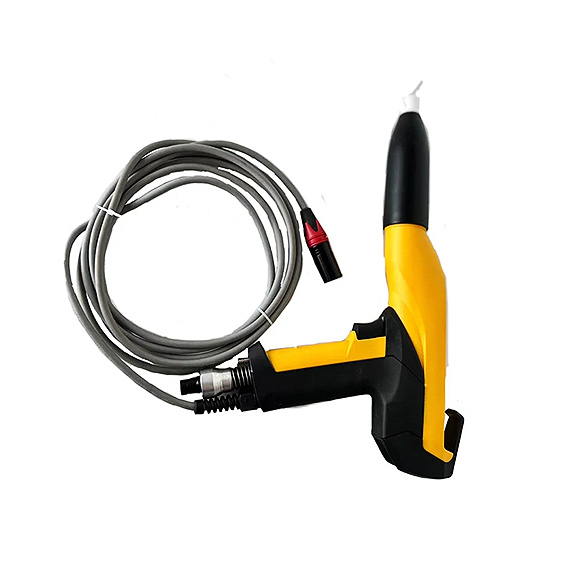
Powder Coat Spray Gun JM4
Electrostatic Powder Coating Gun
Experience efficient coverage with our Powder Coat Spray Gun – an Electrostatic Powder Coating Gun and reliable Powder Coating Gun for flawless finish. Save powder, boost output. Order now!
Powder Coat Spray Gun, Electrostatic Powder Coating Gun, and Powder Coating Gun: The Core of Every Great Finish
In the world of powder coating, the spray gun is the pivotal point where raw materials, physics, and operator skill converge to create a flawless protective and decorative layer. While the industry uses several names to describe this essential tool, three terms dominate the conversation: Powder Coating Gun, Powder Coat Spray Gun, and Electrostatic Powder Coating Gun. Though these names are frequently used interchangeably on the shop floor and in product catalogs, each one highlights a slightly different aspect of the same indispensable device. Understanding what each term emphasizes—and the powerful technology they all share—is the first step toward mastering the art and science of modern dry finishing.
Powder Coating Gun: The Universal Tool for Dry Finishing
The term Powder Coating Gun is the broadest and most widely used category name. It refers to the handheld or automatically mounted device that applies dry powder to a workpiece prior to curing. At its most basic, a powder coating gun is an assembly that combines a grip, a barrel, a powder inlet, and a means of imparting an electrostatic charge. This gun is the operator’s direct interface with the coating process. It shapes the powder cloud, directs it toward the part, and controls the pattern and density of the application. Powder coating guns are available in manual versions, where an operator holds and manipulates the gun, and automatic configurations, where guns are fixed on stands, reciprocators, or robotic arms for high-volume, repeatable production. Whether it is a simple entry-level unit for a home garage or a sophisticated digital gun for an automotive line, the powder coating gun is the one piece of equipment that physically deposits the coating, making its performance the single most influential factor in finish quality.
Powder Coat Spray Gun: Emphasizing the Spraying Function
The phrase Powder Coat Spray Gun places emphasis squarely on the spraying action. This term is frequently used by operators, small business owners, and equipment retailers to highlight the gun’s role as a spray applicator—the device that atomizes and propels powder particles toward the workpiece in a controlled, directional pattern. While technically synonymous with “powder coating gun,” the inclusion of the word “spray” draws a direct parallel to traditional liquid spray guns, helping newcomers understand its function immediately. A powder coat spray gun takes dry powder from a feed source, mixes it with compressed air, and ejects it through a precisely shaped nozzle. The nozzle, often fitted with a deflector, fans the powder into a cloud that can be adjusted from a tight spot to a wide, flat pattern. The best powder coat spray guns offer smooth, pulsation-free powder delivery, lightweight ergonomic bodies that reduce fatigue, and rapid disconnect features for cleaning and color change. They are the physical link between the operator’s intent and the flawless finish on the part.
Electrostatic Powder Coating Gun: The Technology Inside
The term Electrostatic Powder Coating Gun describes the same tool but with a critical technical distinction: it explicitly names the electrostatic principle that makes modern powder coating possible. Inside every professional powder gun, a high-voltage generator—either located in the gun body itself or in a separate control module—delivers a strong negative charge to an electrode at the gun tip. As powder particles pass through this corona field, they become negatively charged. The grounded metal workpiece, acting as an anode, attracts these charged particles, causing them to wrap around edges, penetrate recesses, and cling uniformly to the surface. This electrostatic effect is what gives powder coating its legendary material efficiency and its ability to coat complex shapes in a single pass. An electrostatic powder coating gun allows the operator or automatic controller to adjust the voltage (typically up to 100 kV) and current to suit different powder types, part geometries, and environmental conditions. Advanced guns may offer multiple electrostatic modes, enabling the user to dial in the perfect charge for recoating, for penetrating deep cavities, or for applying thin, smooth films on flat panels. Without the electrostatic charge, a powder gun would simply blow dry powder past the part; with it, the gun becomes a precision instrument of adhesion and uniformity.
How These Three Terms Relate to One Another
In daily practice, these three terms describe the exact same piece of core equipment. The Powder Coating Gun is the universal name; the Powder Coat Spray Gun is the same device viewed through its mechanical spraying function; and the Electrostatic Powder Coating Gun is that identical tool identified by the critical charging technology within it. A professional coating operation does not choose between these three; it selects one physical gun that embodies all three concepts. A high-quality gun will always be a powder coating gun, a powder coat spray gun, and an electrostatic powder coating gun simultaneously. The variation in language simply reflects whether the speaker is focusing on the general category, the application method, or the underlying physics.
Key Advantages Delivered by the Modern Coating Gun
Whether called a powder coating gun, a powder coat spray gun, or an electrostatic powder coating gun, a well-designed unit delivers transformative benefits that explain why powder coating continues to displace liquid paint across countless industries.
1. Exceptional Transfer Efficiency and Material Savings
The electrostatic charge imparted by the gun ensures that a very high percentage of the powder actually deposits on the part. With a proper recovery system in place, overall material utilization can reach 95–98%. This is a dramatic improvement over liquid spray guns, where significant paint is lost as overspray and cannot be reclaimed. For any business, reducing coating material waste directly improves profitability.
2. Outstanding Coating Quality and Uniformity
An Electrostatic Powder Coating Gun enables the deposition of a uniform film thickness across complex shapes. The electrostatic wrap effect pulls powder around edges and into recesses, overcoming the Faraday cage areas that challenge uncharged application methods. The result is a cured finish that is smooth, pinhole-free, and consistent in thickness—typically between 40 and 120 microns—applied in a single coat without runs, drips, or sags.
3. Rapid Application and High Productivity
A Powder Coat Spray Gun can deposit a full coating thickness in seconds. There are no solvents to evaporate, so parts can move directly from the spray booth into the curing oven without a flash-off period. This speeds up cycle times dramatically compared to multi-coat liquid painting. For manual coaters, the ability to achieve full coverage in one pass reduces labor and increases the number of parts finished per hour.
4. Clean, Safe, and Environmentally Friendly Operation
Because the powder is dry and solvent-free, using a Powder Coating Gun generates zero volatile organic compound (VOC) emissions. There are no hazardous solvent odors, no flammable liquid storage concerns, and no toxic paint sludge to dispose of. Oversprayed powder is dry and can be easily collected or contained. This makes the workplace safer for operators and helps businesses comply with increasingly stringent environmental regulations without costly emission-control equipment.
5. Extreme Durability of the Finished Coating
The coatings applied by an electrostatic powder gun are renowned for their toughness. Once cured, the finish provides excellent adhesion, impact resistance, chemical resistance, and weatherability. Architectural finishes can withstand decades of outdoor exposure without fading or chalking. Automotive and industrial coatings easily pass 1,000-hour salt-spray tests. The quality of the gun's electrostatic charging and powder cloud control directly influences the cured film's integrity.
Applications in Every Corner of Manufacturing and Beyond
The versatility of the powder coating gun has made it indispensable across a huge range of industries:
Automotive: Wheels, chassis components, brackets, engine covers, and EV battery trays are coated with corrosion-resistant, chip-proof finishes.
Architecture: Aluminium window frames, curtain wall panels, railings, and structural steel receive durable, weatherable coatings that last for decades.
Home Appliances: Refrigerators, washing machines, dryers, and air conditioners feature bright, scratch-resistant powder-coated surfaces.
Furniture and Metal Fabrication: Office furniture, shelving, fitness equipment, and agricultural machinery rely on powder coating for a combination of aesthetics and toughness.
Custom and Restoration Work: Hobbyists and professionals alike use manual powder coating guns to restore car parts, bicycles, motorcycles, and metal art with factory-quality finishes in their own workshops.
Choosing the Right Gun for Your Needs
Selecting the best Powder Coating Gun, Powder Coat Spray Gun, or Electrostatic Powder Coating Gun comes down to understanding your application. A small job shop or hobbyist will look for a manual gun that is lightweight, ergonomic, and easy to clean, with adjustable voltage and a simple powder cup feed. A medium-sized manufacturer coating consistent parts might choose an automatic gun with digital controls, a fluidized hopper, and compatibility with a reciprocator. A high-volume automotive or architectural line will demand robotic guns with recipe storage, real-time performance monitoring, and integration into a plant-wide control system. In every case, the fundamental requirement is the same: a gun that delivers a stable, controllable electrostatic charge and a smooth, consistent powder cloud.
Conclusion
The Powder Coating Gun, also called the Powder Coat Spray Gun or the Electrostatic Powder Coating Gun, is far more than a simple applicator. It is the instrument through which dry powder becomes a bonded, flawless shield of protection and beauty. Whether you are coating a single bracket in your garage or managing a high-speed automated line, the gun in your hand—or on your robot—defines the quality, efficiency, and sustainability of the entire finishing process. By understanding that these three terms point to one essential, powerful technology, coaters at every level can focus on what truly matters: selecting and mastering the gun that will consistently deliver the world-class results that modern powder coating promises.
Technical Data