

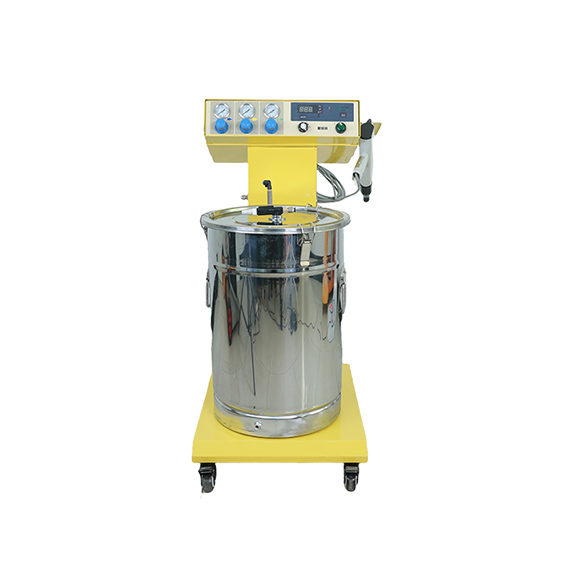
Electrostatic Powder Spraying System 600A-2
Electrostatic Powder Spraying Machine
Shop electrostatic powder spraying machines, spraying systems & electrostatic powder coating machines. Get flawless finishes & high efficiency. Quote now!
Technical Data
Electrostatic Powder Spraying Machine, System, and Coating Machine: The Complete Guide to Modern Powder Finishing
In the world of industrial surface finishing, the terminology used to describe powder application equipment can often seem overlapping. Three phrases frequently dominate the conversation: Electrostatic Powder Spraying Machine, Electrostatic Powder Spraying System, and Electrostatic Powder Coating Machine. While they are sometimes used interchangeably, each term represents a distinct scope of technology and integration. Understanding these differences is essential for selecting the right solution, whether you are establishing a small job shop or a fully automated high-volume production line.
Defining the Three Key Terms
1. Electrostatic Powder Spraying Machine
The term Electrostatic Powder Spraying Machine typically refers to the core application device: the electrostatic spray gun and its immediate supporting components (such as the high-voltage generator and a basic powder feed mechanism). In a manual setup, this "machine" is a handheld unit that an operator uses to coat parts. In an automatic configuration, it is the gun mounted on a fixed stand or reciprocator. This machine is the point where dry powder particles are electrostatically charged and propelled toward a grounded workpiece. Its performance is measured by charge efficiency, transfer efficiency, and spray pattern uniformity.
2. Electrostatic Powder Coating Machine
The phrase Electrostatic Powder Coating Machine is often used as a broader or more generic term for the entire equipment set used in powder coating. It can refer to a standalone spray gun, a complete cart-mounted unit that includes a powder hopper and control module, or even an integrated booth system. In commercial contexts, "powder coating machine" is the most commonly searched term, encompassing everything from a simple manual box-feed unit to sophisticated all-in-one packages for small-scale coating operations. Essentially, this term serves as the umbrella category under which both simple spraying machines and complex systems are marketed.
3. Electrostatic Powder Spraying System
An Electrostatic Powder Spraying System represents the most comprehensive and integrated configuration. It moves beyond the single application unit to include the complete cycle of powder delivery, application, recovery, and environmental control. A true system typically comprises: a powder spray booth, an automatic or manual electrostatic spraying machine, a fluidized-bed powder hopper or feed center, a cyclone or cartridge filter recovery unit, and a central control panel. The system is engineered for seamless operation, with all components designed to work together to maximize powder utilization (up to 98%), ensure consistent film build, and facilitate rapid color changes. For high-throughput lines, this system may also incorporate multi-axis robots, part identification sensors, and IoT-enabled process monitoring.
The Anatomy of a Complete Spraying System
To fully appreciate an Electrostatic Powder Spraying System, it helps to break down its key modules:
Spray Booth & Enclosure: Engineered to contain overspray and direct airborne powder toward the recovery system. Modern booths are often constructed from anti-static materials to prevent powder adhesion and enable quick color change.
Application Machine: The heart of the system—either manual or automatic guns—that delivers the electrostatic charge. Top-tier Electrostatic Powder Spraying Machines within these systems feature digital valve control (DVC) for precise, pulsation-free powder output.
Powder Feed Center: A fluidized bed or hopper that ensures a consistent, conditioned supply of powder to the guns, preventing spitting and surging.
Recovery & Recycling Unit: A cyclone separator or cartridge filter module that captures oversprayed powder and returns it to the feed system. This is what drives the near-100% material utilization that makes powder coating so cost-effective.
Control Architecture: An intelligent controller that governs voltage, current, powder flow, atomizing air, and gun triggering based on pre-programmed recipes, often with the ability to log data for quality traceability.
Core Advantages Across All Three Concepts
Whether you are operating a compact Electrostatic Powder Coating Machine in a workshop or managing a fully automated Electrostatic Powder Spraying System in a factory, the fundamental benefits of electrostatic dry powder application remain transformative:
Zero VOC Emissions: Powder coatings contain no solvents, eliminating hazardous air pollutants and compliance burdens associated with liquid paint.
Superior Material Efficiency: Unlike wet paint overspray that is lost forever, powder overspray can be reclaimed and reused. A well-designed system achieves 95-98% utilization, dramatically reducing waste and cost.
Exceptional Durability: The coating produced by an Electrostatic Powder Spraying Machineexhibits outstanding adhesion, corrosion resistance, and mechanical strength, often outperforming liquid finishes in accelerated weathering and salt-spray tests.
Single-Coat Thick Films: The electrostatic process enables the application of thick, uniform layers (60–120 µm or more) in one pass without runs or sags, streamlining production and reducing labor.
Energy Efficiency: Fast curing cycles and the elimination of solvent evaporation zones mean that an integrated Electrostatic Powder Spraying System consumes significantly less energy than a comparable liquid paint line with thermal oxidizers.
Applications Spanning Every Major Industry
The technology covered by these three terms—Electrostatic Powder Spraying Machine, System, and Coating Machine—is deployed globally across an immense range of sectors:
Automotive & Transportation: Wheels, chassis, engine components, and EV battery trays.
Architecture & Construction: Aluminum window frames, curtain wall panels, railings, and structural steel.
Home Appliances: Washing machine drums, refrigerator cabinets, air conditioner housings.
General Metal Fabrication: Shelving, furniture, fitness equipment, metal enclosures.
Aerospace & Defense: Components requiring high-performance corrosion and chemical resistance.
Choosing the Right Configuration for Your Needs
The choice between an individual Electrostatic Powder Coating Machine and a comprehensive Electrostatic Powder Spraying System depends on scale and complexity. A small job coater may thrive with a manual all-in-one machine that is easy to set up and maintain. A mid-sized manufacturer coating standard parts might invest in an automatic spraying machine with a simple booth and recovery module. A large-scale operation producing millions of parts per year will require a fully engineered spraying system with robotics, automated color change, and digital line integration. In every scenario, the "best" setup is the one that aligns the electrostatic application technology to the production goal—maximizing quality, throughput, and return on investment.
Conclusion
The Electrostatic Powder Spraying Machine is the active endpoint that delivers the coating; the Electrostatic Powder Coating Machine is the broader, often commercially used term for the application unit; and the Electrostatic Powder Spraying System is the fully integrated ecosystem that transforms raw powder into a flawless finish with maximum efficiency. Together, these three concepts define the state of the art in dry finishing—a technology that continues to displace liquid painting through its undeniable environmental, economic, and performance advantages. As manufacturing accelerates toward greater automation and sustainability, investing in the right electrostatic powder technology, whether a single machine or a complete system, is not just an operational choice but a strategic imperative.