

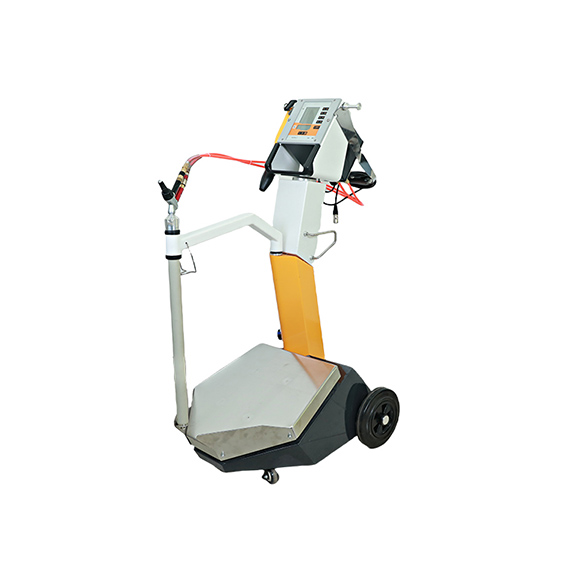
Eectrostatic Coating Machine OptiFlex 2-1
Powder Coat Spray Machine
Upgrade to premium Powder Coat Spray Machines, Electrostatic Coating Machines & complete Powder Coating Machine systems. Get flawless finishes & fast delivery. Click to save!
Technical Data
Powder Coat Spray Machine: Applications and Advantages in the Powder Coating Industry
In the realm of modern industrial surface finishing, powder coating has emerged as a highly efficient and environmentally friendly process, steadily replacing traditional solvent-based liquid painting. At the heart of this technology lies the Powder Coat Spray Machine, also widely known as the Electrostatic Coating Machine or simply the Powder Coating Machine. Operating on the principle of electrostatic attraction, this core equipment applies dry powder coatings evenly onto workpieces, which are then cured under heat to form a tough, dense finish. Today, it finds extensive use across automotive manufacturing, home appliances, architectural materials, construction machinery, aerospace, and many other industrial sectors.
Working Principle
The fundamental working principle of a powder spray machine is based on electrostatic spray technology. A typical system consists of a powder feed unit, an electrostatic spray gun, a high-voltage generator, and a powder recovery system. During operation, the electrostatic gun’s electrode is connected to a high-voltage source, generating a corona discharge that ionizes the surrounding air. Simultaneously, compressed air conveys powder from the feed unit through a hose to the gun. As the powder particles pass through the ionized air, they become negatively charged. Propelled by both air pressure and electrostatic forces, these charged particles are attracted to the grounded workpiece and deposited uniformly on its surface. This powder layer is then heated in a curing oven, where it melts, flows out, and crosslinks to form a durable, high-quality coating.
Modern electrostatic spray guns typically incorporate an integrated high-voltage cascade that reliably delivers voltages up to 100 kV (negative polarity) with output currents around 0–150 µA. The performance of the spray gun directly determines the final coating quality, making it a decisive element in the entire process.
Core Advantages
The widespread adoption of the powder coat spray machine is driven by its remarkable advantages over conventional liquid painting in terms of environmental impact, cost efficiency, and coating quality.
1. Outstanding Environmental Performance
Powder coatings contain no organic solvents, meaning the process generates virtually no volatile organic compound (VOC) emissions. Compared to solvent-based painting, powder coating can reduce organic solvent emissions by approximately 98%, fully complying with increasingly stringent air pollution regulations. In the global push toward carbon neutrality, powder coating stands out as a green surface finishing technology. Additionally, any oversprayed powder that does not adhere to the workpiece can be reclaimed, unlike liquid paint overspray, which typically becomes hazardous solid waste.
2. Exceptional Material Utilization
Another defining advantage is the extremely high powder utilization rate. Thanks to recovery and recycling systems, oversprayed powder can be collected, sieved, and reused, bringing material utilization rates up to 95–98% or nearly 100% in optimized systems. In contrast, transfer efficiency in liquid spray processes is considerably lower, and overspray cannot be reclaimed. Furthermore, advanced technologies such as Digital Valve Control (DVC) ensure precise, repeatable powder output and uniform film thickness, further minimizing waste. This not only slashes coating material costs but also significantly reduces solid waste generation.
3. Superior Coating Performance
Coatings produced by powder spray machines offer excellent mechanical strength, adhesion, corrosion resistance, and weatherability, often outperforming liquid paint at a comparable or lower cost per unit. For instance, powder-coated aluminum profiles can remain free from fading, discoloration, and cracking for 5 to 10 years under normal conditions, with an expected service life of up to 30 years. In architectural applications, powder-coated aluminum curtain walls, window frames, and railings deliver weatherability exceeding 20 years, making them ideal for high-rise buildings and outdoor facilities.
4. High Production Efficiency
In terms of curing speed, powder coating systems offer dramatic improvements. While conventional liquid paint may require 15 to 30 minutes to cure, advanced high-speed electrostatic powder coating processes can achieve curing in as little as 15 to 30 seconds, multiplying curing efficiency by an order of magnitude and reducing energy consumption by over 30% through single-bake cycles. Moreover, an electrostatic coating machine can apply thick films in a single pass, eliminating multiple coats and dramatically boosting throughput and overall equipment effectiveness.
Typical Application Fields
Thanks to its versatile performance, the powder coating machine has penetrated virtually every corner of modern manufacturing. The technology is used to apply protective and decorative finishes to both metal and non-metal objects in industries including automotive, architectural aluminum, construction machinery, home appliances, shipbuilding, containers, steel structures, aerospace, rail transit, wood products, kitchenware, fitness equipment, and general hardware.
In automotive manufacturing, powder spray machines are used for high-volume protective coating of body attachments, wheels, frames, chassis, and other metal components, where corrosion protection and decorative appeal are critical. The home appliance industry relies on powder coating for the exterior finishing of refrigerators, washing machines, air conditioners, and water heaters, achieving durable, aesthetically pleasing surfaces. In architecture and construction, powder coating is the preferred method for aluminum profiles, curtain walls, ceilings, doors and windows, railings, and fire doors, providing long-lasting protection against weathering and corrosion. For construction and agricultural machinery, powder coatings deliver robust anti-corrosion and wear-resistant layers that significantly extend equipment service life.
Notably, technological breakthroughs are continually expanding the boundaries of powder coating. Low-temperature electrostatic powder coating, for example, has successfully applied a process once reserved for metals to engineered wood panels for furniture, offering a revolutionary solution to the VOC and formaldehyde emission challenges in the home furnishing sector.
Trends Toward Intelligence and Automation
Aligned with Industry 4.0 and smart manufacturing, powder spray machines are rapidly evolving toward greater intelligence and automation. Many modern coating lines are now equipped with robotic and reciprocator-based powder spray systems capable of automatically identifying part geometries and adjusting gun positions and spray parameters in real time, greatly enhancing coating uniformity and productivity. Market research indicates that around 52% of new coating lines adopt inline transport systems that can shorten production cycle times by nearly 30%.
Rapid color change technology represents another leap forward. Traditional booths often require nearly an hour of downtime for cleaning when switching powder colors. Today, mobile dual-booth systems allow one booth to operate while the other is cleaned and refilled with a new color, reducing the changeover to a matter of minutes. Some advanced equipment achieves fully automatic color change in under 35 seconds, with all powder-contact parts quickly cleaned while the operator swaps the powder box, minimizing production interruptions.
At the same time, the Internet of Things (IoT) and big data analytics are being deeply integrated into powder coating lines. Intelligent sensors monitor gun voltage, powder density, airflow parameters, and more in real time, enabling predictive maintenance and automatic optimization of process parameters. This shifts the coating operation from experience-based to data-driven manufacturing.
From a market perspective, the powder coating equipment industry is experiencing steady growth. The global powder coating equipment market is projected to grow from approximately USD 3.08 billion in 2025 to around USD 5.03 billion by 2034, at a compound annual growth rate of about 5.6%. This growth is primarily fueled by industrial automation upgrades, increasingly stringent environmental regulations, and sustained demand for high-performance surface finishing solutions across multiple sectors. The Asia-Pacific region, in particular, holds a leading position in the global market, driven by its massive automotive, appliance, and metal fabrication manufacturing base.
Conclusion
The powder coat spray machine – also referred to as the electrostatic coating machine or powder coating machine – serves as the core equipment in the powder finishing process. With its zero-VOC emissions, ultra-high material utilization, excellent coating performance, and efficient production throughput, it is driving a profound transformation of the global industrial finishing industry from the "liquid paint era" into a green "powder era." Driven by carbon neutrality goals and empowered by ongoing advancements in intelligent and automated technologies, the powder coating machine will continue to deliver increasingly eco-friendly, efficient, and economical surface finishing solutions for an even broader range of manufacturing sectors, propelling the global finishing industry toward a new stage of sustainable, high-quality development.