
WhatsApp:+86 139 6595 5948

The Industrial Powder Coating Machine market continues to gain traction as manufacturers switch from solvent-based liquid paint to dry electrostatic finishing technology. Market reports position the global Powder Coating Equipment sector at roughly USD 787.27 million in 2025 with a projected compound annual growth rate near 5.83 percent moving toward 2032.
The Industrial Powder Coating Machine market continues to gain traction as manufacturers switch from solvent-based liquid paint to dry electrostatic finishing technology. Market reports position the global Powder Coating Equipment sector at roughly USD 787.27 million in 2025 with a projected compound annual growth rate near 5.83 percent moving toward 2032. Entry-level manual Industrial Powder Coating Machine systems begin near USD 2,000 to USD 8,000. Mid-tier semi-automatic setups fall between USD 15,000 and USD 60,000. High-capacity automated Industrial Powder Coating Machine lines with multi-gun arrays, integrated recovery, and conveyorized curing ovens typically range from USD 100,000 to over USD 500,000. Principal demand drivers span automotive, heavy equipment, architectural aluminum, home appliance, and general fabricated metal sectors.
Industrial Powder Coating Machine Application Projects Across Production Sectors
Industrial Powder Coating Machine technology serves core manufacturing verticals that demand repeatable finish durability alongside environmental compliance. Automotive tier suppliers deploy Industrial Powder Coating Machine lines for wheel rims, chassis subassemblies, suspension arms, brake calipers, and electric vehicle battery enclosures. Architectural extrusion coaters use Industrial Powder Coating Machine systems on aluminum window frames, curtain wall mullions, door hardware, and exterior cladding panels.
Home appliance manufacturers run washer cabinets, dryer drums, refrigerator cases, water heater jackets, and range bodies through dedicated Industrial Powder Coating Machine cells. Heavy equipment and agricultural machinery producers coat tractor chassis, implement frames, and hydraulic component housings. Electrical enclosure fabricators apply Industrial Powder Coating Machine finishes to switchgear cabinets, transformer cases, and outdoor telecommunications boxes. General metal fabrication job shops handle shelving, storage racks, machinery guards, and material handling equipment across a single Industrial Powder Coating Machine platform.
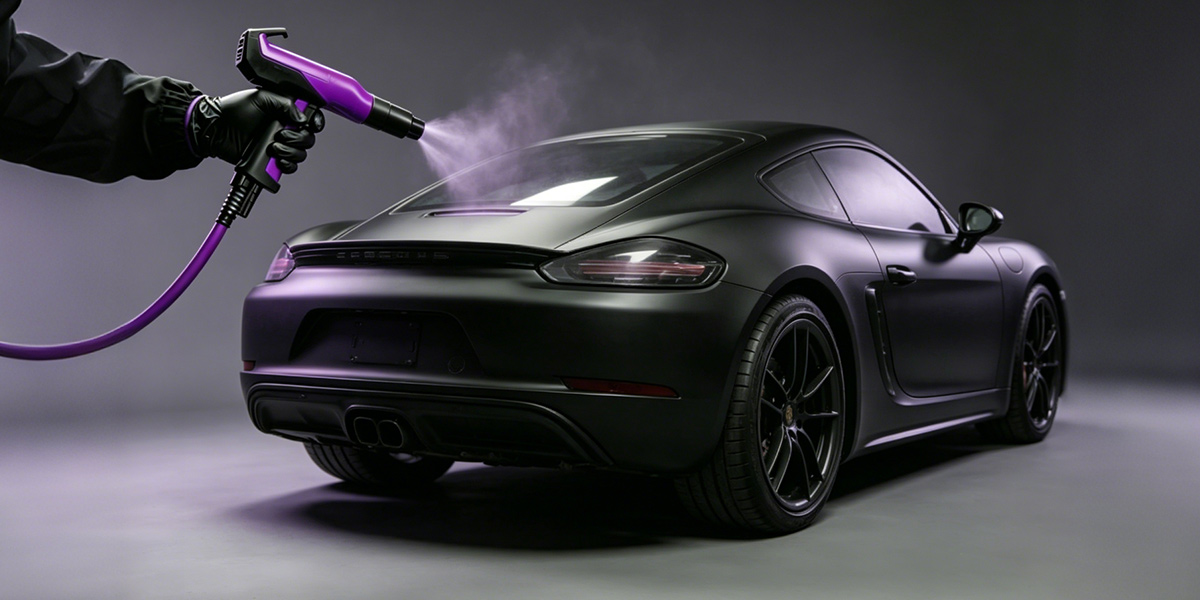
Industrial Powder Coating Machine Surface Preparation Process Technology
Surface preparation governs the ultimate adhesion and service life of any Industrial Powder Coating Machine finish. Parts entering an Industrial Powder Coating Machine line carry stamping lubricants, machining oils, welding scale, and shop dust. A multi-stage pretreatment washer removes these contaminants through a progression of alkaline cleaning stages heated to approximately 60 degrees Celsius followed by city water rinses and a final deionized water rinse to eliminate dissolved mineral deposits. After cleaning and rinsing, many Industrial Powder Coating Machine operations apply a chemical conversion coating.
Iron phosphate generates a fine crystalline layer that anchors the powder mechanically while providing modest under-film corrosion resistance. Zinc phosphate delivers heavier coating weight and stronger corrosion performance, making it standard in automotive and heavy equipment Industrial Powder Coating Machine specifications. Zirconium-based thin-film conversion coatings offer competitive salt spray performance with lower sludge generation and reduced energy input. For heavy structural steel, abrasive blasting to SSPC-SP 10 near-white metal standard replaces chemical pretreatment. Grit media such as aluminum oxide or garnet strip mill scale, rust, and legacy coatings while imparting a sharp angular surface profile that maximizes mechanical bonding. A dry-off oven set between 120 and 150 degrees Celsius removes all surface and absorbed moisture before parts reach the Industrial Powder Coating Machine spray enclosure.
Industrial Powder Coating Machine What Is an Industrial Powder Coating Machine
An Industrial Powder Coating Machine is a production-scale electrostatic finishing system that applies dry thermoset or thermoplastic powder to conductive substrates and then cures the coated parts under controlled heat to form a continuous protective film. Compressed air fluidizes finely ground resin, pigment, and cross-linker particles inside a feed hopper and propels them through a supply hose to the spray gun. An electrode at the gun tip imparts a high-voltage electrostatic charge to the particles as they exit the nozzle. The charged powder cloud wraps around the electrically grounded workpiece and adheres uniformly. After deposition, the part travels through a curing oven where temperatures between 180 and 220 degrees Celsius melt the powder into a liquid film, drive flow and leveling, and trigger the thermosetting chemical reaction that builds a hard, cross-linked polymer network permanently bonded to the metal surface. Unlike manual or small-batch systems, an Industrial Powder Coating Machine integrates automated gun triggering, closed-loop parameter control, high-throughput material handling, and multi-stage powder recovery to sustain consistent output across thousands of parts per shift.
Industrial Powder Coating Machine Core Components
1 Spray Gun Array and Electrostatic Generator The spray guns form the application heart of an Industrial Powder Coating Machine. Corona-charged guns produce 30 to 100 kilovolts at the electrode tip to ionize passing powder. Tribo-charged guns generate charge through frictional contact without a high-voltage cascade. Production Industrial Powder Coating Machine booths mount multiple guns on vertical reciprocators or multi-axis robotic arms. Programmable stroke length, speed, and reversal dwell ensure uniform film thickness across tall or complex parts. Digital guns adjust voltage, current limit, and spray pattern geometry per stored recipe.
2 Powder Feed Center and Fluidized Hopper The feed system delivers a steady, metered powder stream to each gun. A fluidizing plate at the hopper base introduces low-pressure air that suspends powder into a flowable state. Venturi injectors draw fluidized powder into the conveying airstream for short hose runs in manual or semi-automatic Industrial Powder Coating Machine setups. Dense-phase pumps move powder in concentrated plugs for automatic Industrial Powder Coating Machine lines, reducing compressed air consumption, lowering particle velocity, and boosting first-pass transfer efficiency. Centralized powder management stations house multiple virgin and reclaim hoppers with automated sieving and quick-change manifolds.
3 Control System and Recipe Management The control system governs every electrical and pneumatic variable on an Industrial Powder Coating Machine. Microprocessor-based controllers display real-time voltage, micro-ampere current draw, powder flow rate, atomizing air pressure, and fluidizing air pressure. Operators store part-specific settings as named recipes. Selecting a recipe configures gun parameters, reciprocator motion, and conveyor speed. Closed-loop Industrial Powder Coating Machine controls monitor output against setpoint and make continuous micro-corrections. Networked architectures transmit performance data to plant-level SCADA or cloud dashboards for remote monitoring and predictive maintenance scheduling.
4 Powder Recovery and Recycling Module The recovery system captures overspray that bypasses the workpiece and returns it to the feed stream. Cyclone separators use centrifugal force to spin heavier reusable powder outward into a collection bin while fines and dust exit to final filtration. Cartridge filter modules pass booth exhaust through pleated media and clean the filters with pulsed reverse-air jets. An effective Industrial Powder Coating Machine recovery system pushes material utilization above 95 percent, reducing raw powder cost and waste disposal volume.
5 Curing Oven and Thermal Processing Zone The curing oven completes the Industrial Powder Coating Machine process. Convection ovens circulate heated air through the part envelope and work well for complex three-dimensional geometries. Infrared ovens use radiant energy to heat part surfaces directly, cutting bake times by 50 percent or more for simple flat or cylindrical parts. Combination oven designs merge convection and infrared zones. Conveyor speed through the Industrial Powder Coating Machine oven determines dwell time and must match the powder manufacturer's recommended metal-temperature profile for full cure.
Industrial Powder Coating Machine Key Advantages for Production Finishing
Industrial Powder Coating Machine technology delivers measurable advantages over liquid painting in durability, environmental impact, material economy, and throughput. The thermosetting cure reaction builds a densely cross-linked polymer network that resists chipping, scratching, fading, and under-film corrosion. Neutral salt spray testing of Industrial Powder Coating Machine finishes routinely surpasses 1,000 hours on steel substrates. The process emits near-zero volatile organic compounds because no liquid solvents are used. Booth exhaust air can be filtered and returned to the plant, simplifying air permits and lowering compliance costs. Material utilization reaches 95 percent and above through recovery and reuse of overspray, whereas liquid paint transfer efficiency in manual spray frequently stays between 30 and 50 percent. A single Industrial Powder Coating Machine application replaces separate primer, color, and clear-coat steps with a one-pass, one-bake cycle. The electrostatic deposition mechanism inherently resists runs, sags, and edge pull-back, yielding uniform film thickness across sharp corners, weld seams, and recessed areas.
Industrial Powder Coating Machine How to Choose the Right Industrial Powder Coating Machine
Match the Industrial Powder Coating Machine configuration to production volume and part envelope. A batch booth with one or two manual guns and a box oven handles fewer than 500 parts per day with dimensions under one meter. A conveyorized Industrial Powder Coating Machine with two to four automatic guns and a continuous oven manages 2,000 to 10,000 parts per shift. High-volume dedicated lines with multi-gun reciprocators, robotic manipulators, and ovens exceeding 30 meters process parts at rates measured in units per minute. Confirm that the Industrial Powder Coating Machine feed system and gun technology are compatible with the powder chemistries your application requires, whether epoxy, polyester, epoxy-polyester hybrid, or urethane. Evaluate automation level against labor cost, flexibility needs, and part variety. Robotic Industrial Powder Coating Machine cells combine throughput with programmable flexibility for multiple part numbers. Consider energy features such as variable-frequency drives on exhaust fans, oven heat recovery, and high-efficiency cyclone recovery that reduce operating cost over a 10-year service horizon. Select a supplier that offers installation support, operator training, local spare parts inventory, and application engineering service.
Industrial Powder Coating Machine How to Maintain an Industrial Powder Coating Machine
Daily Industrial Powder Coating Machine maintenance begins with cleaning gun nozzles, electrode assemblies, and deflector tips to remove impact-fused powder. Purge feed hoses with compressed air between color changes. Wipe down booth interior walls with a grounded cloth and vacuum powder accumulations from booth floors, ledges, and light fixtures. Weekly tasks include inspecting and cleaning recovery system cartridge filters, verifying pulse-jet cleaning function by observing pressure drop recovery, and lubricating reciprocator linear bearings and conveyor trolley wheels per manufacturer specification. Monthly Industrial Powder Coating Machine care covers calibrating gun voltage and current output against a reference meter, measuring booth face velocity at a grid of points to confirm uniform airflow, and testing all safety interlocks including airflow switches, over-temperature limits, and emergency stops. Annual shutdown maintenance for an Industrial Powder Coating Machine replaces worn pump venturi inserts, rebuilds gun electrode assemblies with new insulators and contact pins, swaps out recovery filter cartridges at end of service life, and conducts a full combustion efficiency analysis on gas-fired oven burners.
Industrial Powder Coating Machine How to Troubleshoot Common Industrial Powder Coating Machine Defects
Orange peel on an Industrial Powder Coating Machine finish indicates insufficient powder flow and leveling during the cure cycle. Confirm that the part reaches the powder manufacturer's specified metal temperature using a through-oven data logger and that soak time meets specification. Pinholes point to substrate outgassing where trapped gases from casting porosity, weld voids, or pretreatment residues erupt through the molten film. Pre-heat parts above cure temperature before entering the Industrial Powder Coating Machine booth to drive off volatiles, improve rinsing after pretreatment, and apply a thinner powder pass to shorten the gas escape path. Poor adhesion with the coating peeling in sheets signals a pretreatment failure. Re-validate cleaner concentration, rinse conductivity, conversion coating weight, and dry-off oven temperature. Back-ionization producing a stippled, orange-peel-like surface comes from excessive electrostatic charge accumulating on thick powder layers. Reduce gun voltage, increase gun-to-part standoff distance, or lower powder output to resolve this Industrial Powder Coating Machine issue.
Industrial Powder Coating Machine How to Set Up an Industrial Powder Coating Machine for Repeatable Production
Hang clean pretreated test parts on the Industrial Powder Coating Machine conveyor and verify electrical ground continuity with a megohmmeter reading under one megohm. Set gun voltage between 60 and 80 kilovolts for flat surfaces and reduce to 30 to 50 kilovolts for inside corners or deep pockets prone to Faraday cage rejection. Adjust powder flow rate to hit target cured film thickness in a single pass. Set atomizing air pressure to produce a symmetrical, well-defined powder cloud without excessive velocity that causes bounce-back, typically 0.5 to 1.5 bar depending on gun design. Record all Industrial Powder Coating Machine parameters as a part-specific recipe in the control system. During production verify pretreatment quality on incoming parts, confirm the correct recipe is active, activate booth exhaust and check face velocity, spray as parts enter, inspect the first coated part exiting the booth for coverage uniformity, and continuously monitor uncured film thickness with a powder comb gauge before the oven entry.
Industrial Powder Coating Machine How to Control Industrial Powder Coating Machine Operating Costs and Maximize Return
Material cost dominates Industrial Powder Coating Machine operating expense. Raise first-pass transfer efficiency by reducing gun output to the minimum that achieves target film thickness, maintaining gun-to-part distance between 150 and 300 millimeters, ensuring solid part grounding, and lowering voltage when back-ionization appears. Energy ranks second, with ovens consuming 60 to 70 percent of total Industrial Powder Coating Machine energy. Keep oven setpoint at the minimum temperature that achieves full cure and reduce to idle during production gaps longer than 30 minutes. Each 10-degree Celsius reduction in oven temperature cuts natural gas use by roughly 5 to 7 percent. Improve labor productivity by batching same-color work orders to minimize changeover downtime and staging pre-sorted parts at the Industrial Powder Coating Machine load station. Return on investment for an Industrial Powder Coating Machine typically emerges within 12 to 24 months when transitioning from outsourced coating to in-house capability, as the margin between contract coating fees and direct operating cost accrues to the equipment owner.
Industrial Powder Coating Machine How to Implement Safety Practices on an Industrial Powder Coating Machine
Combustible dust management stands as the highest safety priority on any Industrial Powder Coating Machine line. Install explosion vent panels on recovery modules and isolation valves in interconnecting ductwork per NFPA 68. Prevent powder accumulation on horizontal surfaces, equipment tops, and overhead structures through documented shift-level housekeeping. Verify electrical grounding of all conductive components, booth structure, recovery ductwork, and gun mounts with resistance to earth under one megohm. Maintain booth face velocity between 0.5 and 0.7 meters per second with exhaust fan interlocks that prevent gun activation if airflow drops. Equip operators with powered air-purifying respirators fitted with P100 cartridges, anti-static footwear, and natural-fiber or flame-resistant outer garments. Wire oven temperature interlocks to cut heat sources if setpoint is exceeded by more than 15 degrees Celsius. Post grounding verification, housekeeping sign-off, and emergency stop test procedures as mandatory shift-start routines for every Industrial Powder Coating Machine operator.
Title:Industrial Powder Coating Machine A Direct Buyer Evaluation for Production Coating
Link:https://www.coatinggun.com/news/Industrial-Powder-Coating-Machine-A-Direct-Buyer-Evaluation-for-Production-Coating
Statement: Coating Equipment Co., Ltd Chinese Powder Coating Equipment facturers provide you with customized equipment for various types of Powder Coating Lines, Powder Coating Ovens, Powder Coating Booths,Powder Coating Guns, etc. For inquiries! Contact us at Email: mypowdercoater@gmail.com WhatsApp: +86 139 6595 5948