
WhatsApp:+86 139 6595 5948

The global Powder Coat Machine market continues to rise as manufacturers switch from liquid painting to dry finishing technology. Market data indicates the Powder Coating Equipment sector was valued at around USD 787.27 million in 2025 and is projected to grow at roughly 5.83 percent annually through 2032.
The global Powder Coat Machine market continues to rise as manufacturers switch from liquid painting to dry finishing technology. Market data indicates the Powder Coating Equipment sector was valued at around USD 787.27 million in 2025 and is projected to grow at roughly 5.83 percent annually through 2032. Entry-level manual Powder Coat Machine kits typically cost between USD 2,000 and USD 8,000. Mid-range professional setups with conveyors and batch ovens fall between USD 15,000 and USD 60,000. Fully automated Powder Coat Machine lines with multi-gun arrays reach USD 100,000 to USD 500,000. Demand comes strongly from automotive, architectural, appliance, and general industrial sectors.
Powder Coat Machine Application Projects and Industry Usage
Powder Coat Machine technology serves industries that demand durable, attractive finishes with environmental compliance. Automotive manufacturing uses Powder Coat Machine lines on wheel hubs, chassis components, suspension parts, and battery trays. Architectural fabricators coat aluminum window frames, curtain wall sections, door hardware, and exterior cladding panels. Home appliance producers operate Powder Coat Machine setups on washer cabinets, refrigerator cases, water heater jackets and range bodies. General industrial manufacturers coat electrical enclosures, machinery frames, shelving systems, and material handling equipment. Furniture and sporting goods makers use Powder Coat Machine equipment on metal office desks, outdoor patio sets, bicycle frames, and exercise machines.
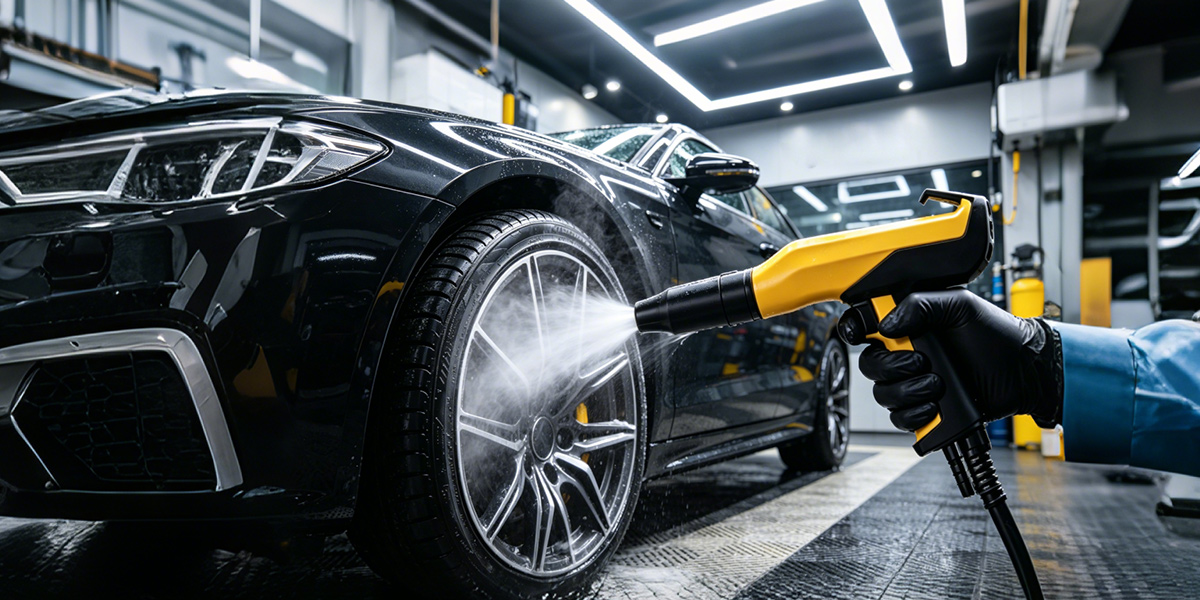
Powder Coat Machine Surface Preparation Process Technology
Surface preparation determines how well a Powder Coat Machine finish bonds and lasts. Parts arriving at the coating line carry machining oils, stamping lubricants, and anti-corrosion preservatives. The first Powder Coat Machine pretreatment station uses alkaline cleaning solutions heated to about 60 degrees Celsius for degreasing. Multiple rinse stages follow to eliminate residual chemistry. A chemical conversion coating station applies iron phosphate or zinc phosphate to create a crystalline bonding layer under the powder. Some Powder Coat Machine operations use abrasive blasting with aluminum oxide or steel grit instead to remove mill scale and create a mechanical adhesion profile. A dry-off oven operating at 120 to 150 degrees Celsius then removes all surface moisture before parts enter the Powder Coat Machine spray booth.
Powder Coat Machine What Is a Powder Coat Machine
A Powder Coat Machine is an industrial finishing system that applies dry, free-flowing powder to metal surfaces using electrostatic attraction before thermally curing the coated part. Compressed air fluidizes and propels finely ground resin and pigment particles through a spray gun. An electrode inside the gun imparts a high-voltage charge to the particles. The charged powder clings to the grounded workpiece with remarkable uniformity. The coated part then travels through a curing oven at 180 to 220 degrees Celsius where the powder melts, flows into a continuous film, and chemically cross-links into a hard protective layer.
Powder Coat Machine Core Components
1 Spray Gun and Electrostatic Generator This hand-held or machine-mounted tool receives fluidized powder from the feed hose. Inside the gun barrel a high-voltage electrode charges the particles. Corona-charged Powder Coat Machine guns produce 30 to 100 kilovolts to create an ionized field. Tribo-charged guns generate friction-based charging without a high-voltage supply. The gun determines transfer efficiency, edge wrap, and Faraday cage penetration.
2 Powder Feed System and Hopper The feed system supplies a controlled powder stream to the gun. A fluidizing plate at the hopper base introduces low-pressure air that suspends the powder into a flowable state. Venturi pumps draw the fluidized powder into the airstream for manual applications. Dense-phase pumps move material in concentrated plugs for automated Powder Coat Machine lines, reducing air consumption and bounce-back.
3 Control Unit The control unit regulates every electrical and pneumatic parameter. It displays real-time voltage, current, powder flow rate, and air pressure readings. Operators store part-specific recipes in the control unit memory for repeatable results when running the Powder Coat Machine across shifts.
4 Powder Recovery System The recovery module captures overspray particles that miss the target parts. Cyclone separators spin heavier powder outward into a collection bin. Cartridge filters trap finer particles on pleated media. Automatic pulse-jet cleaning dislodges accumulated powder back into the feed loop. An effective Powder Coat Machine recovery setup pushes material utilization above 95 percent.
5 Curing Oven The oven melts, flows, and cross-links the applied powder into a permanent coating. Convection ovens circulate heated air for complex three-dimensional parts. Infrared panels heat part surfaces directly for faster bake cycles on simpler geometries. Most production Powder Coat Machine lines use combination convection-infrared ovens to balance speed and versatility.
Powder Coat Machine Key Advantages
Powder Coat Machine finishes deliver exceptional durability. The thermosetting reaction creates densely cross-linked polymer networks that resist chipping, scratching, fading, and corrosion. Salt spray testing routinely exceeds 1,000 hours without under-film failure. The process emits zero volatile organic compounds. No liquid solvents are needed, so no hazardous air pollutants are released during spraying or curing. This simplifies air permitting and supports sustainability programs. Material utilization exceeds 95 percent through recovery and reuse of overspray powder. Liquid paint transfer efficiency often falls between 30 and 50 percent with unrecoverable overspray. A Powder Coat Machine also eliminates separate primer and clear coat steps. One coat achieves corrosion protection and finish appearance in a single application and a single bake cycle. The electrostatic mechanism naturally resists runs, sags, and thin spots. Film thickness stays uniform even on edges, corners, and recessed areas.
Powder Coat Machine How to Choose the Right System
Match the Powder Coat Machine to your production volume. Manual Powder Coat Machine stations suit operations coating fewer than 500 parts per day with maximum dimensions under one meter. Semi-automatic Powder Coat Machine lines with conveyorized booths and two to four automatic guns handle 2,000 to 10,000 parts per shift. Full automatic Powder Coat Machine systems with multi-gun arrays and robotic reciprocators process parts at rates measured in units per minute for dedicated high-volume production.
Powder Coat Machine How to Maintain a Powder Coat Machine
Daily Powder Coat Machine maintenance starts with cleaning spray gun nozzles and electrode assemblies. Powder buildup distorts spray patterns and reduces charging efficiency. After color changes purge powder feed hoses with compressed air. Wipe down booth interior walls and vacuum accumulated powder from floors. Weekly Powder Coat Machine checks include inspecting recovery system cartridge filters, verifying pulse-jet cleaning cycles, and lubricating reciprocator bearings. Monthly tasks cover calibrating gun voltage output against reference standards, measuring booth face velocity at multiple grid points, and testing all safety interlocks. Annual Powder Coat Machine shutdown maintenance replaces worn pump venturi throats, rebuilds gun electrode assemblies, and conducts full electrical safety testing.
Powder Coat Machine How to Troubleshoot Coating Defects
Orange peel texture on a Powder Coat Machine finish indicates insufficient powder flow during curing. Verify parts reach the powder manufacturer's recommended metal temperature using a data logger traveling through the oven. Pinhole defects point to substrate outgassing where trapped gases rupture the molten coating. Pre-heat parts above cure temperature before Powder Coat Machine application to drive off volatiles. Poor adhesion with the coating delaminating in sheets signals pretreatment failure from inadequate cleaning or insufficient conversion coating. Back-ionization producing a stippled surface comes from excessive charge accumulation on thick powder layers. Reduce gun voltage and increase gun-to-part distance to resolve this Powder Coat Machine defect.
Powder Coat Machine How to Set Up a Powder Coat Machine for Consistent Results
Establish and document standard operating parameters for each part number. Hang clean pretreated test parts and verify ground continuity with a megohmmeter. Set gun voltage between 60 and 80 kilovolts for flat surfaces, reduced to 30 to 50 kilovolts for parts with deep recesses. Adjust powder flow rate to produce target film thickness in a single pass. Set atomizing air pressure to produce a symmetrical powder cloud without excessive velocity causing bounce-back. Record all Powder Coat Machine parameters as a part-specific recipe in the control unit. During production verify pretreatment quality on incoming parts and monitor film thickness using a powder gauge before the curing oven.
Powder Coat Machine How to Control Operating Costs
Material cost represents the largest Powder Coat Machine operating expense. Increase transfer efficiency by reducing gun output to the minimum achieving target thickness. Maintain proper gun-to-part distance between 150 and 300 millimeters. Ensure reliable part grounding. Adjust voltage downward when back-ionization appears. Energy costs follow powder expense with ovens consuming 60 to 70 percent of total Powder Coat Machine energy. Reduce oven setpoint where possible without compromising cure. Shut down ovens to idle during production gaps exceeding 30 minutes. Organize parts by color to batch same-color jobs and cut color-change downtime. Stage pre-sorted parts near the load station to eliminate operator travel.
Powder Coat Machine How to Implement Safety Practices
Combustible dust management stands as the top safety concern in Powder Coat Machine operations. Install explosion vent panels and isolation valves on recovery systems. Prevent powder accumulation on horizontal surfaces and equipment tops through regular housekeeping. Verify electrical grounding of all conductive components with resistance to earth under one megohm. Maintain booth face velocity between 0.5 and 0.7 meters per second. Interlock exhaust fans to prevent gun operation when airflow drops. Supply operators with powered air-purifying respirators and anti-static footwear. Hard-wire oven temperature interlocks to shut down heat sources if the setpoint is exceeded by more than 15 degrees Celsius.
Title:Powder Coat Machine A Buyer’s Guide to Equipment and Finishing Performance
Link:https://www.coatinggun.com/powder-coating-machine-info/Powder-Coat-Machine-A-Buyer’s-Guide-to-Equipment-and-Finishing-Performance
Statement: Coating Equipment Co., Ltd Chinese Powder Coating Equipment facturers provide you with customized equipment for various types of Powder Coating Lines, Powder Coating Ovens, Powder Coating Booths,Powder Coating Guns, etc. For inquiries! Contact us at Email: mypowdercoater@gmail.com WhatsApp: +86 139 6595 5948