
WhatsApp:+86 139 6595 5948

The global market for Powder Coating Equipment reached approximately USD 787.27 million in 2025 and is forecast to climb to USD 1,170.69 million by 2032, reflecting a compound annual growth rate of 5.83%.
The global market for Powder Coating Equipment reached approximately USD 787.27 million in 2025 and is forecast to climb to USD 1,170.69 million by 2032, reflecting a compound annual growth rate of 5.83%. Entry-level manual Powder Coating Machine systems typically start from USD 2,000 to USD 8,000, while mid-range professional setups range from USD 15,000 to USD 60,000. Fully automated Powder Coating Machine lines with conveyors, multi-gun arrays, and integrated recovery systems commonly fall between USD 100,000 and USD 500,000. Demand remains concentrated in automotive manufacturing, architectural metal fabrication, general industrial finishing, and consumer appliance production, driven by tightening environmental regulations on solvent-based coatings and growing requirements for durable corrosion-resistant finishes across these sectors.
Powder Coating Machine What Is a Powder Coating Machine
A Powder Coating Machine is an industrial finishing system that applies dry, free-flowing powder to metal surfaces through electrostatic principles before thermally curing the coated part into a hard, uniform protective layer. The process is fundamentally different from conventional liquid painting. Rather than suspending pigments in evaporating solvents, a Powder Coating Machine uses compressed air to fluidize and propel finely ground particles of resin, pigment, and curing agents toward a grounded workpiece. An electrostatic charge imparted to the particles causes them to cling to the substrate with remarkable uniformity. After application, the coated part enters a curing oven where temperatures between 180 degrees Celsius and 220 degrees Celsius melt the powder, trigger chemical cross-linking reactions, and form a continuous film that bonds tightly to the metal surface.
Powder Coating Machine technology eliminates volatile organic compounds entirely from the finishing process. No liquid solvents are required for application, which means no hazardous air pollutants are released during spraying or curing. This characteristic has made Powder Coating Machine systems a preferred choice for manufacturers facing increasingly strict emissions regulations across North America, Europe, and Asia. The technology also supports near-complete material utilization because overspray powder that fails to adhere to parts can be collected through recovery systems, sieved, and returned to the feed hopper for reuse without quality degradation.
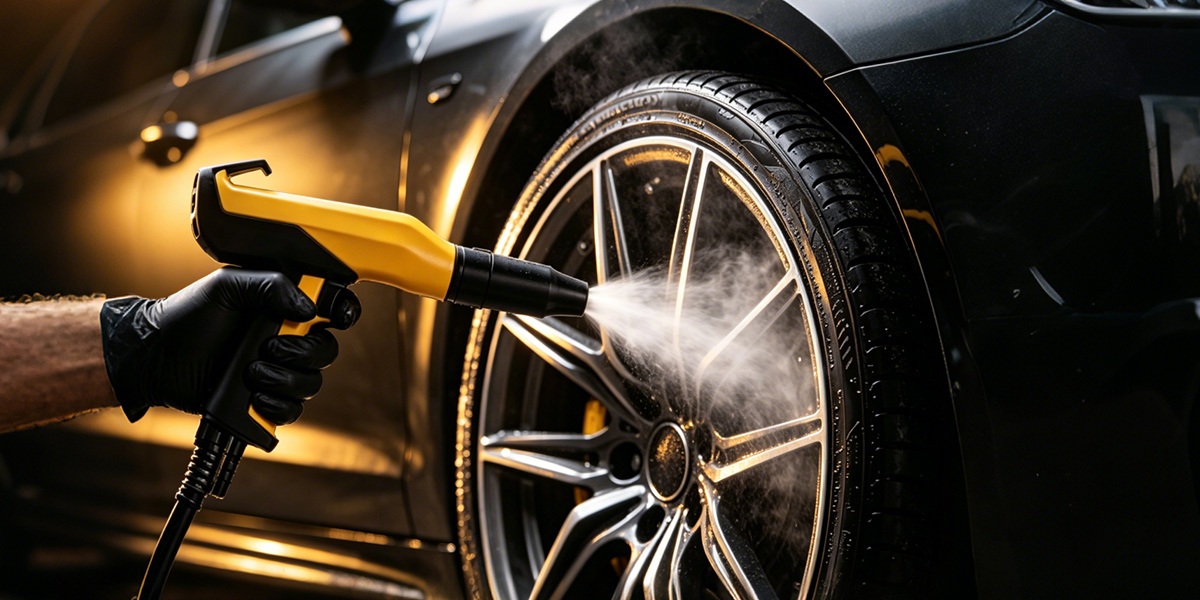
Modern Powder Coating Machine equipment spans a broad spectrum of configurations. Manual Powder Coating Machine systems put a spray gun directly in an operator's hands, suitable for low-volume production, complex part geometries, and frequent color changes. Automated Powder Coating Machine lines incorporate multi-axis reciprocators, robotic arms, and programmed spray sequences to coat high volumes of identical parts with consistent film thickness across every unit. Between these extremes, semi-automatic Powder Coating Machine setups allow operators to load and unload parts while automated guns handle the spraying cycle. The choice among these configurations depends on production volume, part variety, dimensional complexity, and available labor.
Powder Coating Machine Core Components
A Powder Coating Machine is not a single device but an integrated system of interconnected components working in sequence. Each element performs a distinct function within the overall finishing process, and the performance of the entire Powder Coating Machine system depends on how well these components are matched to one another and to the specific coating application.
1. Powder Spray Gun and Applicator Assembly
The Powder Spray Gun is the primary application instrument in any Powder Coating Machine system. This hand-held or machine-mounted tool receives fluidized powder through a feed hose and propels it through a shaped nozzle toward the target surface. Inside the gun barrel, a high-voltage electrode imparts an electrostatic charge to the passing powder particles. In Corona-charged Powder Coating Machine guns, a voltage generator producing 30 to 100 kilovolts creates an ionized field at the electrode tip, and particles passing through this field acquire a negative charge. Tribo-charged Powder Coating Machine guns generate the charge through friction as powder rubs against specialized internal surfaces, producing positively charged particles without a high-voltage power supply.
The Powder Spray Gun directly influences transfer efficiency, edge coverage, and penetration into recesses. Modern digital Powder Coating Machine guns feature programmable voltage settings, adjustable current limits measured in microamperes, and selectable spray patterns ranging from narrow jets for deep cavities to wide fans for flat panels. Quick-change nozzle systems allow operators to switch between different spray geometries without tools, reducing downtime during production changeovers. Some advanced Powder Coating Machine guns incorporate automatic feedback circuits that detect changes in part-to-gun distance and adjust output parameters to maintain consistent film build.
2. Powder Feed System and Hopper
The Powder Feed System supplies a steady, controlled stream of coating material to the spray gun. In a Powder Coating Machine, this subsystem starts with a powder hopper or bin that holds the bulk coating material. Fluidizing plates at the base of the hopper introduce low-pressure air that suspends the powder particles, transforming the dry material into a fluid-like state that flows readily through hoses and tubes. Venturi pumps or dense-phase pumps then draw the fluidized powder from the hopper and push it through feed lines to the gun.
Venturi-based Powder Coating Machine feed systems use compressed air passing through a constriction to create suction, pulling powder into the airstream. These systems are simple, reliable, and well-suited for short hose runs in manual applications. Dense-phase Powder Coating Machine feed systems employ higher powder-to-air ratios, moving material in concentrated plugs rather than dilute clouds. Dense-phase technology reduces air consumption, improves transfer efficiency, and produces softer spray patterns with less overspray bounce-back. Large automated Powder Coating Machine installations often deploy centralized powder management centers that house multiple hoppers, automated sieving stations, and color-change systems capable of switching between powder types in minutes.
3. Control Unit and Electrical Management
The Control Unit serves as the command center of a Powder Coating Machine, regulating every electrical and pneumatic parameter that affects coating quality. This module typically includes microprocessor-based controllers with digital displays that show real-time voltage output, current draw, powder flow rate, atomizing air pressure, and fluidizing air pressure. Operators use the Control Unit to set and lock parameters for specific part recipes, ensuring repeatable results across shifts and operators.
Advanced Powder Coating Machine Control Units incorporate recipe storage memory that can hold dozens or hundreds of part-specific programs. Operators select a stored recipe and the Control Unit automatically configures all gun parameters, conveyor speed setpoints, and reciprocator stroke settings if automated motion systems are integrated. Closed-loop Powder Coating Machine controls monitor actual output against setpoints and make continuous micro-adjustments to compensate for variations in powder conditions, ambient temperature, or line speed. Some Powder Coating Machine control architectures now connect to plant-wide IoT platforms, transmitting performance data to cloud-based dashboards for remote monitoring, predictive maintenance scheduling, and quality trend analysis.
4. Powder Recovery and Recycling System
The Powder Recovery System captures overspray particles that miss the target parts and either returns them to the feed loop or collects them for disposal. This component of a Powder Coating Machine addresses both economic and safety concerns. Financially, recovery systems reclaim powder that would otherwise represent material waste, typically achieving reclaim rates exceeding 95 percent when properly configured. From a safety perspective, recovery systems control airborne powder concentrations to stay well below explosive limits.
Cyclone-based Powder Coating Machine recovery systems use centrifugal force to separate powder particles from the exhaust airstream. Heavier reclaimable powder spins outward and drops into a collection bin while finer particles and dust continue through to final filtration. Cartridge-filter Powder Coating Machine recovery systems pass booth exhaust through pleated filter media that trap particles on the surface. Automatic pulse-jet cleaning mechanisms periodically blast compressed air backward through the filters to dislodge accumulated powder, which falls into recovery hoppers. Modern Powder Coating Machine booths often combine both technologies in series, using cyclones as primary separators followed by cartridge filters for final air cleaning before recirculation or exhaust.
5. Curing Oven and Thermal Processing
The Curing Oven completes the Powder Coating Machine process by applying the heat necessary to melt, flow, and chemically cross-link the powder into a finished coating. Parts exiting the spray booth carry a layer of powder held in place by electrostatic attraction alone. This powder remains fragile and can be dislodged by gentle contact or air movement. Inside the Curing Oven, sustained temperatures between 180 and 220 degrees Celsius cause the powder particles to melt into a continuous liquid film, flow out to a smooth surface, and undergo the thermosetting reaction that permanently hardens the coating.
Convection Curing Ovens used in Powder Coating Machine lines circulate heated air around parts to transfer thermal energy. Gas-fired or electrically heated, these ovens handle complex three-dimensional geometries effectively because air flows into recesses and around projections. Infrared Curing Ovens employ radiant energy to heat part surfaces directly rather than heating the surrounding air. Infrared Powder Coating Machine curing can reduce bake times by 50 to 90 percent compared to convection methods, though line-of-sight limitations make it more suitable for simple, flat, or cylindrical parts. Combination Powder Coating Machine ovens merge convection and infrared zones to balance speed with geometry-handling capability.
Powder Coating Machine Key Advantages
Powder Coating Machine technology delivers substantial benefits across durability, environmental compliance, cost efficiency, and finish quality. These advantages explain the steady market growth and expanding application range of Powder Coating Machine systems across diverse manufacturing sectors.
Powder Coating Machine finishes demonstrate exceptional resistance to chipping, scratching, fading, and corrosion. The thermosetting chemical reaction during curing creates densely cross-linked polymer networks that are mechanically tougher and chemically more inert than air-dried liquid paint films. Salt spray testing of Powder Coating Machine finishes routinely exceeds 1,000 hours without under-film corrosion, making them suitable for outdoor architectural components, marine hardware, and automotive underbody parts subjected to road salt and stone impact.
Zero volatile organic compound emission is a defining environmental advantage of Powder Coating Machine technology. Unlike liquid painting operations that require expensive afterburners or carbon adsorption systems to capture solvent vapors, Powder Coating Machine booths exhaust air that can often be filtered and returned directly to the plant environment without atmospheric discharge. This characteristic simplifies air permitting, reduces regulatory compliance costs, and aligns Powder Coating Machine operations with corporate sustainability initiatives and green building certification requirements.
Material utilization efficiency in Powder Coating Machine systems reaches levels unattainable with liquid spray painting. Liquid paint transfer efficiency in manual spray operations often falls between 30 and 50 percent, with the remainder lost as overspray that cannot be economically recovered. Powder Coating Machine recovery systems reclaim overspray for direct reuse, pushing overall material utilization above 95 percent. This near-closed-loop operation reduces raw material costs, minimizes waste disposal volumes, and shortens the payback period for Powder Coating Machine capital investments.
Powder Coating Machine production throughput benefits from the single-coat capability of the technology. Many liquid finishing specifications require separate primer, color, and clear coat applications with inter-coat drying steps. A Powder Coating Machine can deposit a single thick layer that achieves both corrosion protection and aesthetic requirements in one application and one curing cycle. The absence of solvent flash-off time further accelerates cycle times. Parts can move from dry metal to finished, packaged product in a continuous Powder Coating Machine line with total dwell times measured in tens of minutes rather than hours.
Consistent finish quality across production runs represents another Powder Coating Machine strength. The electrostatic deposition mechanism inherently resists runs, sags, and thin spots that plague liquid coating processes. Once an area of the part accumulates sufficient powder thickness, the insulating layer repels additional charged particles, naturally limiting film build. This self-limiting behavior helps Powder Coating Machine operators achieve uniform film thickness even on parts with complex shapes, sharp edges, and deep recesses where liquid paint frequently produces uneven coverage.
Powder Coating Machine Application Projects Across Industries
Powder Coating Machine systems operate in a remarkably diverse range of manufacturing environments. The technology has expanded from its origins in durable-goods finishing to penetrate industries that historically relied on liquid coatings, driven by the combination of finish performance, environmental compliance, and long-term cost advantages.
Automotive manufacturing represents one of the largest application segments for Powder Coating Machine technology. Automakers and tier suppliers use Powder Coating Machine lines to coat wheels, chassis components, suspension parts, engine brackets, seat frames, and battery trays for electric vehicles. Powder Coating Machine finishes on automotive underbody components withstand years of exposure to salt, gravel impact, and thermal cycling without delamination. Wheel manufacturers favor Powder Coating Machine technology for the combination of chip resistance and the wide range of available colors, textures, and metallic effects that support vehicle customization programs.
Architectural and construction applications consume substantial Powder Coating Machine capacity worldwide. Aluminum window frames, curtain wall systems, door hardware, balcony railings, structural steel elements, and exterior cladding panels receive Powder Coating Machine finishes that resist ultraviolet degradation, acid rain attack, and coastal salt spray for decades. The ability of Powder Coating Machine systems to apply coatings meeting AAMA 2603, 2604, and 2605 performance specifications makes the technology compatible with the most demanding architectural project requirements.
General industrial manufacturers deploy Powder Coating Machine equipment across an enormous range of products including electrical enclosures, switchgear cabinets, transformer housings, machinery frames, toolboxes, shelving systems, storage racks, and material handling equipment. The combination of production speed, finish durability, and low per-unit cost makes Powder Coating Machine technology the default finishing method for fabricated metal products in this category.
Furniture and consumer goods producers operate Powder Coating Machine lines for metal office furniture, outdoor patio sets, shelving units, light fixtures, exercise equipment, bicycle frames, and appliance housings. Powder Coating Machine finishes in this segment deliver the aesthetic qualities that consumers expect while providing the scratch and stain resistance that keeps products looking new through years of use. The availability of textured Powder Coating Machine finishes that hide fingerprints and minor surface imperfections adds practical value for consumer-facing applications.
Appliance manufacturing relies extensively on Powder Coating Machine technology for washer and dryer cabinets, refrigerator cases, water heater jackets, range bodies, and microwave cavities. Home appliance surfaces coated with Powder Coating Machine finishes resist detergent attack, steam exposure, impact damage, and the daily wear of household use. The high transfer efficiency of modern Powder Coating Machine systems helps appliance manufacturers control finishing costs in a price-competitive market segment.
Powder Coating Machine Surface Preparation Process Technology
Surface preparation determines the ultimate performance of any Powder Coating Machine finish. The highest-quality powder applied through the most sophisticated Powder Coating Machine equipment will fail prematurely if the underlying substrate is not properly cleaned, conditioned, and dried before coating. Industry experience consistently shows that pretreatment accounts for approximately 70 percent of final coating quality, making it the most consequential stage in the entire Powder Coating Machine process.
Degreasing is the first pretreatment step in a Powder Coating Machine operation. Metal parts arrive at the finishing line carrying manufacturing residues including machining oils, stamping lubricants, forming compounds, anti-corrosion preservatives, and fingerprints. Alkaline cleaning solutions heated to approximately 60 degrees Celsius remove these organic contaminants through saponification and emulsification. Powder Coating Machine pretreatment lines typically use immersion tanks or spray washers to contact all surfaces of the part with cleaning chemistry. Parts with complex internal cavities may require multiple cleaning stages or ultrasonic agitation to ensure complete soil removal.
Rinsing follows every chemical treatment step in a Powder Coating Machine pretreatment sequence. Municipal water rinses remove residual cleaning chemistry and suspended soils. Deionized water or reverse-osmosis water rinses in the final stage eliminate dissolved minerals that could leave surface deposits interfering with coating adhesion. Multi-stage Powder Coating Machine pretreatment washers commonly include three to seven sequential stations, progressing from heavy-duty alkaline cleaning through progressively cleaner rinse stages to a final virgin-water rinse.
Chemical conversion coating creates the foundation for Powder Coating Machine adhesion and corrosion protection. Iron phosphate conversion coatings are widely used in general industrial Powder Coating Machine applications, depositing a thin crystalline layer that increases surface area for mechanical bonding while providing a degree of under-film corrosion resistance. Zinc phosphate conversion coatings offer heavier coating weights and superior corrosion performance, making them standard in automotive Powder Coating Machine specifications. Emerging zirconium-based conversion coatings provide corrosion protection comparable to zinc phosphate with reduced sludge generation and lower operating temperatures, supporting sustainability goals in Powder Coating Machine operations.
Mechanical surface preparation through abrasive blasting serves as an alternative or supplement to chemical pretreatment in Powder Coating Machine processes. Grit blasting with aluminum oxide, steel grit, or garnet media removes mill scale, rust, and existing coatings while creating a surface profile that dramatically increases mechanical adhesion. Shot blasting produces a peened surface with compressive stress that improves fatigue resistance in addition to providing excellent Powder Coating Machine adhesion. The SSPC-SP 10 near-white blast cleaning standard is commonly specified for Powder Coating Machine applications in corrosive service environments.
Drying after pretreatment is mandatory before Powder Coating Machine application. Moisture trapped on or within parts causes coating defects when it vaporizes during curing, producing blisters, pinholes, and loss of adhesion. Dry-off ovens operating between 120 and 150 degrees Celsius remove all surface and absorbed moisture before parts enter the Powder Coating Machine spray booth. Effective drying prevents the most common and costly Powder Coating Machine quality problems while preparing parts at a temperature that improves initial powder attraction during electrostatic application.
Powder Coating Machine How to Choose the Right Powder Coating Machine
Selecting the appropriate Powder Coating Machine for a specific manufacturing operation requires systematic evaluation of production requirements, technical specifications, supplier capabilities, and economic factors. A structured selection process prevents expensive mismatches between equipment capabilities and actual production needs.
Production volume and part size are the foundational selection parameters for any Powder Coating Machine investment. A manual Powder Coating Machine station with a single-operator spray booth and batch curing oven suits operations coating fewer than 500 parts per day with maximum dimensions under one meter. Medium-volume Powder Coating Machine systems incorporating a conveyorized booth with two to four automatic guns, a continuous cure oven, and integrated pretreatment can handle 2,000 to 10,000 parts per shift. High-volume automotive or appliance Powder Coating Machine lines with multi-station booths, robotic gun manipulators, and ovens exceeding 30 meters in length process parts at rates measured in units per minute.
Material compatibility with the Powder Coating Machine feed system and gun technology affects coating quality and operational efficiency. Epoxy powders deliver superior chemical resistance but chalk under ultraviolet exposure, limiting them to interior Powder Coating Machine applications. Polyester powders offer excellent exterior durability and color retention for architectural Powder Coating Machine projects. Epoxy-polyester hybrid powders balance interior durability with cost economy for general industrial Powder Coating Machine use. Urethane powders provide outstanding thin-film smoothness for premium consumer-facing Powder Coating Machine finishes. The Powder Coating Machine must be configurable for the specific powder chemistries required by the target application.
Automation level selection for a Powder Coating Machine involves balancing labor costs against capital investment against flexibility requirements. Manual Powder Coating Machine systems maximize flexibility for frequent part changeovers and low volumes while requiring skilled operators who develop expertise over years of practice. Full automatic Powder Coating Machine lines with fixed gun arrays deliver consistent film thickness at high speed for dedicated production of a limited part family. Robotic Powder Coating Machine cells combine automation consistency with programmable flexibility, allowing one cell to coat multiple part numbers without mechanical changeover. The Powder Coating Machine automation architecture should match both current production mix and foreseeable future requirements.
Energy efficiency and operating costs play an increasingly important role in Powder Coating Machine selection decisions. Variable-frequency drives on Powder Coating Machine exhaust fans reduce electrical consumption during low-production periods. Heat recovery systems capture thermal energy from cure oven exhaust and transfer it to incoming combustion air or pretreatment tank heating, cutting natural gas consumption by 15 to 25 percent. Powder Coating Machine recovery systems with high-efficiency cyclones reduce the load on final filtration stages, extending filter life and reducing compressed air consumption for pulse cleaning. Lifecycle cost analysis of Powder Coating Machine options should account for energy, consumables, maintenance labor, and anticipated component replacement over a 10-year operating horizon.
Supplier evaluation for Powder Coating Machine procurement should extend beyond equipment specifications to assess installation support, operator training, spare parts availability, and ongoing technical service. Established Powder Coating Machine manufacturers maintain regional service centers, carry comprehensive spare parts inventories, and employ application engineers who can troubleshoot coating defects and optimize process parameters. The warranty terms offered on key Powder Coating Machine components including guns, control systems, recovery modules, and oven burner assemblies indicate the manufacturer's confidence in their equipment reliability.
Powder Coating Machine Safety Practices and Operating Precautions
Powder Coating Machine operations involve combustible dust, high-voltage electricity, elevated temperatures, and moving mechanical equipment. A comprehensive safety program addressing each of these hazards protects personnel, prevents property damage, and ensures regulatory compliance for Powder Coating Machine facilities.
Combustible dust management is the highest-priority safety concern in Powder Coating Machine operations. Organic powder coating materials suspended in air at concentrations between their lower and upper explosive limits can ignite if exposed to an ignition source, producing a deflagration that can rupture equipment and propagate through connected ductwork. Powder Coating Machine booths must comply with National Fire Protection Association standards including NFPA 33 governing spray application of flammable materials and NFPA 68 covering deflagration venting. Powder Coating Machine recovery systems require explosion vent panels, chemical isolation systems, or mechanical isolation valves to prevent deflagration propagation between equipment modules. Housekeeping procedures must prevent accumulation of powder on horizontal surfaces, ledges, and equipment tops where it could become airborne during an incident.
Electrical grounding is fundamental to both Powder Coating Machine safety and coating performance. All conductive components of the Powder Coating Machine system including the booth structure, recovery ductwork, powder hoses, and gun mounts must be bonded to a common grounding grid with resistance to earth measuring less than one megohm. The workpiece being coated must maintain a reliable ground path throughout its travel through the Powder Coating Machine booth to attract charged powder particles. Ungrounded or poorly grounded parts accumulate charge during spraying and can discharge to operators or equipment, causing painful shocks and potentially igniting powder clouds. Powder Coating Machine operators should verify grounding continuity at the start of each shift using a megohmmeter.
Personal protective equipment requirements for Powder Coating Machine operations address respiratory, dermal, and static discharge risks. NIOSH-approved N95 or P100 respirators protect Powder Coating Machine operators from inhaling airborne powder particles, though many facilities exceed this minimum by supplying powered air-purifying respirators or supplied-air systems for improved comfort during extended spraying operations. Anti-static or conductive footwear prevents operator body charge accumulation that could discharge to grounded equipment. Cotton or inherently flame-resistant outer garments avoid synthetic fabrics that can generate static electricity or melt onto skin during arc flash events. Chemical-resistant gloves protect against skin contact during powder handling, color changes, and equipment cleaning.
Ventilation system integrity directly affects Powder Coating Machine safety and coating quality. Booth face velocity must be maintained within design specifications, typically 0.5 to 0.7 meters per second, to contain powder within the booth while not disrupting the electrostatic deposition process. Powder Coating Machine exhaust fan interlocks should prevent gun operation if airflow falls below safe minimums. Differential pressure monitoring across Powder Coating Machine recovery filters provides early warning of filter blinding or rupture. Emergency stop circuits on Powder Coating Machine conveyors, reciprocators, and robotic systems must be tested and documented at prescribed intervals.
Curing oven safety in Powder Coating Machine lines addresses both fire hazards and personnel protection. Oven temperature interlocks must shut down heat sources if setpoint is exceeded by a safety margin, typically 15 to 20 degrees Celsius above normal operating temperature. Powder Coating Machine cure ovens processing parts that could retain combustible residues require regular cleaning to prevent accumulation of materials that could auto-ignite at operating temperatures. Oven exhaust systems must be sized to remove any volatile byproducts released during Powder Coating Machine curing, preventing the buildup of flammable vapor concentrations within the heated zone.
Powder Coating Machine Design Engineering and System Rationality
Effective Powder Coating Machine design integrates mechanical engineering, electrostatics, aerodynamics, thermal processing, and material handling into a coherent, balanced system. A well-designed Powder Coating Machine line produces consistent coating quality across thousands of parts while minimizing energy consumption, powder waste, and operator intervention.
Booth airflow design determines powder containment, transfer efficiency, and color-change speed in a Powder Coating Machine system. Computational fluid dynamics modeling of booth air patterns identifies dead zones where powder could accumulate, turbulence that could disrupt spray patterns, and extraction velocities that could pull powder away from part surfaces before deposition. Modern Powder Coating Machine booth designs aim for laminar, downdraft airflow that sweeps overspray uniformly toward floor-level recovery slots. This configuration minimizes horizontal powder transport across part surfaces, reducing the potential for cross-contamination during color changes.
Spray gun positioning and motion programming in automated Powder Coating Machine systems require careful engineering to achieve uniform film thickness across complex part geometries. Gun-to-part distance affects both transfer efficiency and the severity of Faraday cage effects that prevent powder penetration into inside corners and recesses. Reciprocator stroke length, speed profile, and reversal dwell time influence coating uniformity along vertical surfaces. Multi-gun Powder Coating Machine configurations must balance gun spacing to prevent interference between adjacent spray patterns while covering the full part envelope without gaps. Digital twin simulation tools now allow Powder Coating Machine engineers to model gun placement and spray sequencing virtually before cutting metal, reducing commissioning time and powder consumption during process development.
Conveyor system design in Powder Coating Machine lines influences production rate, part orientation, and coating consistency. Overhead monorail conveyors provide continuous motion through pretreatment, dry-off, Powder Coating Machine booth, and cure oven with minimal part handling. Power-and-free conveyor systems allow individual carriers to stop at load and unload stations while the main chain continues moving, providing accumulation capability that buffers line imbalances. Conveyor speed in a Powder Coating Machine line determines dwell time in each process zone and must be selected to achieve required pretreatment contact time, powder application coverage, and full cure through the oven while meeting production rate targets.
Energy integration in Powder Coating Machine design reduces operating costs and environmental footprint. Cascade heat recovery captures high-temperature oven exhaust to preheat dry-off oven makeup air or pretreatment tank solutions. Variable-speed drives on Powder Coating Machine booth exhaust fans reduce power draw when production gaps reduce overspray generation. Insulation specifications for Powder Coating Machine ovens balance capital cost against ongoing energy losses, with thicker insulation reducing heat loss through oven walls and roofs. Energy monitoring sub-meters on major Powder Coating Machine energy consumers including oven burners, air compressors, and chiller systems enable ongoing efficiency tracking and deterioration detection.
Modularity in Powder Coating Machine design preserves flexibility for future production changes. Modular Powder Coating Machine booth sections can be added to extend spray zones as throughput requirements increase. Plug-and-play gun mounting systems allow addition of spray guns to existing reciprocator slots without control system reconfiguration. Expandable Powder Coating Machine control architectures accept additional input/output modules as automation scope grows. This design approach protects the initial Powder Coating Machine investment against obsolescence as production volumes, part sizes, or coating specifications evolve over the equipment's service life.
Title:Finding the Right Powder Coating Machine for Your Finishing Needs
Link:https://www.coatinggun.com/powder-coating-machine-info/Finding-the-Right-Powder-Coating-Machine-for-Your-Finishing-Needs
Statement: Coating Equipment Co., Ltd Chinese Powder Coating Equipment facturers provide you with customized equipment for various types of Powder Coating Lines, Powder Coating Ovens, Powder Coating Booths,Powder Coating Guns, etc. For inquiries! Contact us at Email: mypowdercoater@gmail.com WhatsApp: +86 139 6595 5948